Ludonarrative Dissonance, Character Writing, and The Illusion of Choice in Video Games

Or Shut Up and Test
When it comes to game making, one of the greatest teachers of all is objective failure. I rarely ever write anything proactively about video games in a mindful ways of story writing but when now I write it from the angle of experience due to my failures and my successes.
In most team settings I am regulated to the designing of interfaces, experience mapping or leading a team in scrum meetings as SCRUM Leader. The few times I’ve ever worked as a writer with other writer's for a game I now find myself asking myself and the team :
“What are the tasks that are open to the player?”
“What is the toolkit the player can use to play the game?”
And this is before I write down or program any gameplay.
I start to write as if I am in the mind of the player, designing the experience from initial start up to the very end. Then I add choices or critical choices that are key to an experience that a player would decide.
Experience mapping is often like writing a DND campaign or running any game as the illusive GM (Game Master). In essence the GM's job is to design an experience for an allotted amount of time not too dissimilar to a story writer in game development.
You are guiding users through your game and your most important value is you want your players to experience and enjoy playing your game. But the question you have to ask yourself is: Are these choices real? Are they meaningful?
Now many of my peers would say “Nothing is real in a game, as it is programmed to be that way.”
Yes but that isn’t the illusion of choice. The illusion of choice is when we the designers do not account for player choice, we have our own choices that have been made by us. There is major differences between a player and a designer. A designer is analytical often tearing something apart from a mechanical standpoint, we are biased in our ways. A player has their own inherent biases often found. Because of this division the designer is woefully unprepared for players deciding to make choices of their own.
This my dear reader is the value of testing users and a brilliant QA team walks in and flutters away to begin their job. Yet as a designer you don't want the view of the QA team all the time, you want outside feedback, the feedback of a first time user. The valuable and ever sought first experience.
That is where our tale truly begins.

Our Mistakes
My first game I ever made was designed in failure. Most importantly it did not account for player choice.
Yet I did everything right, I tested, I designed, I built it, I followed the book of UX but I didn’t take it's lessons of true design to heart. The brilliance of a player's first experience with a game and how they will play it, is so radically differently than what a designer originally intended.
For this reason we must account for those variables. Players have varied reasons for what they do. They are vastly intelligent people trying to experience your game! That was something as a first time game maker that is hard to understand.
People will want to play your game, no matter how bad it looks. If the game is entertaining, and the interface is workable, players will adapt. Though it will color their thoughts, the point is to design an experience that makes those players ignore those quirks and enjoy the experience of playing your game. Even if it is awful.
If you want your player's choices to matter you want to see how they react, what do they do when they encounter a blockade? Do they try to jump over, or try to find away around, have you only programmed one solution to your puzzle? Are there other ways of winning? These choices if accounted for in terms of solutions rewards and incentives player behavior. It creates a byproduct of the feel of success.
The greatest moments as a designer, is seeing a player attempt a solution and succeeds. Doing it in a way that you had thought impossible. These are both exciting and nerve wracking for your programmers.
On the topic of failures, I cannot think of a better example than Fallout 4 (And the recent release of fallout 76) is an example of poor execution in terms of player choice, the players are simply not given enough choices in story to want to progress. Why am I forced to make a critical decision in this moment?
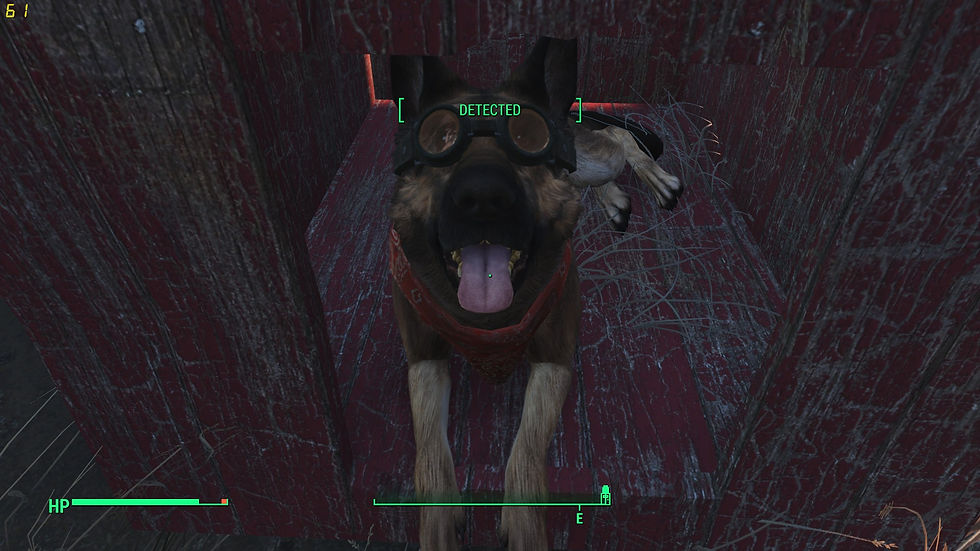
All the dialogue in fallout 4 can be broken down to the following that a player can choose : Good, Bad or Sarcastic. Now the question is are these choices real or illusion of choice? Providing the player binary options that make no difference in story or game-play?
The answer is no, the dialogue options offer nothing different in most of its dialogue systems.
In Fact it is one of the largest criticisms of that game is this feeling the player gets into when trying to achieve the major goal of the game… Find your Son. A pretty simple goal, yet the player can or would ignore that goal entirely instead of trying to save and find your son you can go around just do anything. A true parent or anyone for that matter with a son or daughter who has gone missing would do the opposite no matter what.
A simple choice that could’ve been added into fallout 4 is to simply force the player to play this story mission. And to not carry the weight of a changing or rapid world so quickly. Instead elongating it and focusing the story on you (the player) trying to find your son. Instead constantly you will go to other npcs in actual search pleading with people “have you seen my son?”
Instead we are not give this option, only a few npcs have any dialogue pertaining to this. Even one of the most sympathetic Factions and the most powerful factions you cannot tell them as to WHY you are helping them you have very limiting options to find your son. Thus creating what we like to call… Ludo-narrative Dissonance!
Ludio Whatsit?!
Ludonarrative Dissonance is as defined by wikipedia as :
is the conflict between a video game's narrative told through the story and the narrative told through the gameplay. Ludonarrative, a compound of ludology and narrative, refers to the intersection in a video game of ludic elements – or gameplay – and narrative elements.
This is a disconnect between the narrative and gameplay. Fallout 4 for all that is good about it has many issues pertaining to its in world usage. Characters not mentioning a recent event that literally happened right next to them, or a gameplay element that is at odds with the story trying to be told.
When it comes to writing a video game you have to consider, “How does effect my world?”. In some cases it wouldn’t make sense for someone in ireland to know exactly what you did at a movie theater, or how you saved a random person from a dragon. Unless that person was extremely important many people would not know or care if it was common in that world to have dragons and people to be saved. Unless earth shattering events happen, the status quo is interrupted by the sudden death of a major king, leader, or organization.
Many games try to alleviate this by reducing the amount of ‘playable’ or direct actors. Those that can be interacted with the player. To borrow a phrase “We can’t do everything!” Game Designers use shortcuts to ensure that we cover our bases for major events that happen in our games. Some circumvent it by having very few characters that are directly involved with the player like God of War 4.

Circumvention
The surefire way to prevent a player experiencing ludonarrative dissonance is to limit the amount of interaction the player can have with other actors. This way we can control the experience of the player and they don’t feel that uneasiness.
God of War 4 does this by only have four characters that you directly interact with. Atreius, The Dwarf Brothers, and the Witch are the only major characters you can talk with or do anything with in a talking variety.
But after certain events one of these characters is locked out forever, because of the events of the story. Thus reinforcing this idea of consequences for the players or the characters actions.
Every game needs consequences of decisions, to allow the player to have and feel those actions feel real. Either they be the weighty throwing of an axe and realizing you don’t have that axe anymore or a decision to kill a character. It should feel important to that character's narrative and mechanics.
This article is written mostly to help people understand what Ludonarrative dissonance is, and how to ensure that we prevent it in our games. Players do not want to feel like they are walking blindly and are at odds with the story because the gameplay doesn’t match.
This problem we face in writing games is rampant, it's hard to dissuade and to avoid in large productions, almost impossible in some cases. Sometimes it takes a large amount of foresight to design for specific interactions.
Prevention is something not found as an after fact. It seems less credible the farther you go into a production. It starts at the very beginning of the process, back before any critical decision is made, it is the inclusion of relevance and understanding “This has to be in here.” To dedicate time and resources to implement changes into the games first process to account for change.
The goal of any good designer is to give moments and experiences that a player remembers and enjoys. Design for the player in mind, stand in their shoes, what would they like to see. Then with that on your mind you will have a successful game that both brings player choice and brings players closer to the experience.

Comments